
Nutrition and Food Science department
- About the Department
- Head of Department's Message
- Registration Requirements
- Credit Hours Regulations
- Study Schedules
- Faculty Members
- Master’s and PhD Theses
- Scientific Publications
- Department Council Formation
- Academic Advisors
- Former Heads
About the Department

Department Mission:
The department primarily aims to graduate specialists capable of working as nutritionists who meet the technical needs of institutions such as hospitals and nutritional care facilities, as well as food manufacturing factories and their products, ensuring product quality and conducting research in the field of specialization. It also meets service needs in the fields of teaching (Ministry of Education) and media, while equipping graduates with knowledge and skills based on academic standards and research and applied project requirements to compete in the field with full awareness of community and environmental issues and professional ethics.
The department's mission also extends to enhancing graduate capabilities through specialized courses, training programs, and offering postgraduate diploma programs and degrees (Master’s and Ph.D.) in the field. Additionally, the department contributes to the enrichment of applied sciences through consultations, training sessions, and the production unit.
Program Objectives – Department of Nutrition and Food Sciences
Preparing scientifically and technically qualified graduates in the field of Nutrition and Food Sciences, capable of:
- Developing, improving, and marketing food products.
- Providing nutritional care to individuals and groups by designing and preparing meal models suited to their health conditions.
- Continuous development and updates in scientific research, administrative work, and specialization-related fields.
- Spreading concepts, information, and scientific and health fundamentals related to nutrition and food sciences among consumers and through media.
- Promoting scientific concepts and techniques in the evaluation and assurance of food products and related food services.
- Analyzing and interpreting problems related to nutritional and health aspects connected to the economic status of the community and finding suitable solutions.
- Active participation in programs and projects related to nutrition that address growth and development stages of individuals.
- Designing suitable dietary meals in the field of therapeutic nutrition using advanced technological tools.
Graduate Attributes – Nutrition and Food Sciences Program:
The graduate of the Nutrition and Food Sciences Program should be capable of:
- Applying the relationships between basic sciences (chemistry – biology – biochemistry) and nutrition, and using the principles of these sciences in nutritional practice.
- Possessing scientific knowledge of food, nutrition, behavioral sciences, and management theories.
- Acquiring the skills needed to improve the quantity and quality of food and nutrition to meet the needs of individuals and groups.
- Applying theories and benefiting from problem-solving and critical thinking.
- Providing nutritional education and consultations to individuals and groups.
- Understanding the roles, responsibilities, and competencies required for nutritionists in the fields of nutrition management, clinical nutrition, administrative, and community nutrition.
- Working with various groups and in institutions related to nutrition at the local and regional levels.
- Scientifically evaluating the quality of food products.
Career Opportunities for Nutrition and Food Sciences Graduates:
- Institutions providing nutritional care such as (elderly homes – nurseries – university dormitories – food factories).
- Food factories as food quality and safety inspectors.
- Hospitals and nutrition departments in the field of clinical nutrition.
- Research centers as specialized researchers in nutrition and food sciences.
- Media in the field of nutritional education.
- Ministry of Education as a home economics teacher and the Ministry of Higher Education as an academic staff member.
- Sports institutions as sports nutritionists.
Program Distinctive Features – Nutrition and Food Sciences:
- The Nutrition and Food Sciences Program is the first of its kind in this specialty at the national and regional levels.
- The department includes pioneers in the field of nutrition and food sciences at the national and regional levels.
- The department established the Clinical Nutrition Program in English as the first specialized program in this field at the national level.
- The department offers researchers and postgraduate students several specialized diplomas in nutrition, as well as Master’s and Ph.D. degrees in both majors (Nutrition and Food Sciences).
- There is a Nutrition Consultation Office at the faculty that provides support to those in need in the field of nutrition, both within and outside the faculty, under the scientific supervision of the department.
Head of Department's Message
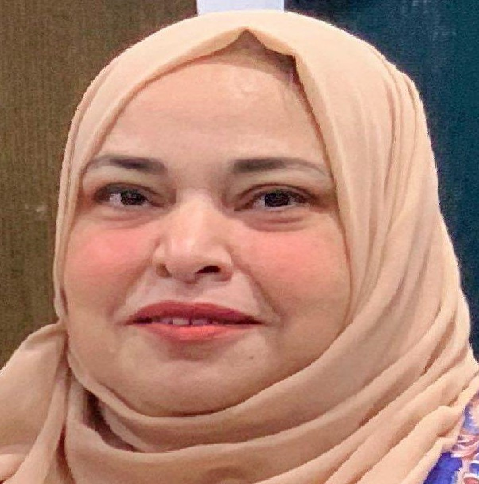
Prof. Dr. Hala Abdel Rahman Khattab
Acting Head of the Department of Nutrition and Food Sciences
My esteemed professors, academic colleagues, researchers, and dear students......
It gives me great pleasure to welcome you to the Department of Nutrition and Food Sciences, in my name and on behalf of all department members, which includes a distinguished group of faculty specialists in the Arab world in the field of nutrition and food sciences.
Nutrition and food sciences are among the most important disciplines in life sciences, combining both academic and applied sciences. Today, nutrition is no longer just general recommendations; it is an exact science based on evidence and scientific proofs. Nutrition plays a vital role in preventing and controlling many nutrition-related diseases. It is a vital field that influences our lives, addressing the relationship between what humans consume and their physical and mental health. Likewise, food sciences are the essential foundation that ensures the delivery of safe and nutritious food to humans. The program's curriculum goes beyond studying the chemical and physical composition of food to include the development of manufacturing processes, improvement of preservation methods to ensure maximum nutritional value, the design of functional foods that promote health, ensuring food security, reducing waste, and developing sustainable food products that meet community needs. Therefore, the outcomes of the Department of Nutrition and Food Sciences program work practically to solve tomorrow's challenges today.
There are many global challenges in the fields of nutrition and food sciences, especially with the widespread prevalence of modern diseases. This necessitates the innovation of sustainable nutritional solutions in light of climate change and population growth challenges. At the Department of Nutrition and Food Sciences, we strive to graduate generations of specialists capable of facing these challenges and contributing to building a better nutritional and health future for society. We believe that knowledge is the key to change, and that cooperation between academic, industrial, and governmental sectors is the best path to progress.
We ask Allah Almighty for progress, support, and success in all that brings goodness to this department and contributes to the advancement and excellence of the prestigious Helwan University. We hope this website provides everyone with ample information about the department, faculty members, and their scientific and research activities.
Acting Head of the Department
Prof. Dr. Hala Abdel Rahman Khattab
Enrollment Requirements

Program Admission Requirements:
- Obtaining a General Secondary Certificate (Mathematics or Science division). Equivalent certificates for international students are accepted according to the rules set by the relevant authorities. Admission is based on total grade ranking.
- Passing the "Food and Nutrition" course in the first year.
Regulations for Program Continuation:
- The student moves from the current academic year to the next if they pass all courses or fail no more than two courses (from the same year or a lower year), including cultural courses, language, and Human Rights. The Human Rights subject is included in the total grade of the academic year. The student retakes exams for failed subjects with students in the year the course is taught. A passing grade of "Pass" is considered if no acceptable excuse is submitted to the faculty council.
- If a course includes both written and practical exams, the student's final grade is the total of both plus course work. If the student misses the written exam, they are considered absent for the entire course and receive no grade. The student must obtain at least 50% in the written exam to pass the course.
- In September, a special exam is held for final-year students who failed in no more than two courses, in addition to cultural subjects, language, and Human Rights.
- Final-year students must complete a graduation project. The department council assigns the topic according to the credit hours in the curriculum. Failure in the project results in failing the academic year.
- Failure in field training results in failing the academic year.
Enrollment Conditions for the Diploma Stage:
- The student must hold a Bachelor's degree in Home Economics (specialization branch) from a faculty of Home Economics or an equivalent degree.
- All documents required by the university council must be completed, after consulting the faculty council.
Enrollment Conditions for the Master's Degree:
- The student must hold a Bachelor's degree in Home Economics in the relevant specialization with a general grade of at least "Good" and at least "Good" in specific courses as determined by the department and faculty councils. Alternatively, the student may have a postgraduate diploma in the specialization with at least a "Good" grade.
- The period since obtaining the Bachelor's degree must not exceed the limit set by the university council after consulting the faculty council.
- For international students, the university council, upon recommendation from the relevant academic departments and faculty council, determines their enrollment conditions.
- The student must complete all required documents as defined by the university council after consultation with the faculty council.
Enrollment Cancellation:
The student’s registration for the master’s degree will be canceled if they do not submit a thesis proposal within three years from the enrollment date. In such a case, the student may be awarded a general diploma in the specialization if all required master’s courses were completed successfully with a minimum GPA of C+.
Enrollment Conditions for the Doctorate Stage:
- The student must hold a Master's degree awarded by a faculty of Home Economics or an equivalent degree.
- The student must complete all required documents as approved by the university council after consultation with the faculty council.
Enrollment Cancellation:
The student’s registration for the PhD degree will be canceled if they do not submit a thesis proposal within three years from the enrollment date.


Faculty and Assistant Staff Data – Department of Nutrition and Food Sciences

Statement of the Names of Faculty Members and Their Assistants in the Department of Nutrition and Food Sciences
for the Academic Year 2024/2025
| No. | Name of Faculty Member / Assistant Staff | Job Title | CV |
|---|---|---|---|
| 1 | Prof. Dr. Sonia Saleh Zaki Hafez | Emeritus Professor | — |
| 2 | Prof. Dr. Ashraf Abdelaziz Abdelmageed | Emeritus Professor | — |
| 3 | Prof. Dr. Mona Sami Halaby Khalil | Emeritus Professor | — |
| 4 | Prof. Dr. Rawya Rizk Abdelghany | Emeritus Professor | — |
| 5 | Prof. Dr. Eman Mohamed Mokbel Ghallab | Emeritus Professor | — |
| 6 | Prof. Dr. Eman Abdelhady Mohamed Al-Boloni | Emeritus Professor | — |
| 7 | Prof. Dr. Elham Mohamed Mahmoud | Emeritus Professor | — |
| 8 | Prof. Dr. Ahmed Awad Farag | Emeritus Professor | — |
| 9 | Prof. Dr. Ahmed Ali Amin Morsi | Emeritus Professor | — |
| 10 | Prof. Dr. Fatma Labib Ahmed Hussein | Emeritus Professor | — |
| 11 | Prof. Dr. Mona Massoud El-Sayed Mohamed | Emeritus Professor | — |
| 12 | Prof. Dr. Wafaa Shokry Ali Abdeen | Emeritus Professor | — |
| 13 | Prof. Dr. Ali Rashad Abdelmo’men | Emeritus Professor | — |
| 14 | Dr. Lotfiya Abdelmawla El-Saadany | Emeritus Lecturer | — |
| 15 | Dr. Safaa Mahmoud Mohamed Foda | Emeritus Lecturer | — |
| 16 | Prof. Dr. Hala Abdelrahman Hassan | Professor | — |
| 17 | Prof. Dr. Manal Kamal Abdelrahman | Professor | — |
| 18 | Prof. Dr. Lamiaa Ali Ahmed Ali | Professor | — |
| 19 | Prof. Dr. Nihal Mohamed Abdelmageed | Professor | — |
| 20 | Prof. Dr. Ibrahim Said Salem | Professor | — |
| 21 | Prof. Dr. Mohamed Hamdy Farag Haggag | Professor | — |
| 22 | Prof. Dr. Riham Aboul-Mohasen Mohamed | Professor | — |
| 23 | Prof. Dr. Maysa Mohamed Shehata Mohamed | Professor | — |
| 24 | Prof. Dr. Amr Abdelmardy Mohamed | Professor | — |
| 25 | Prof. Dr. Amal Fawzy Mohamed Morsi | Professor | — |
| 26 | Assoc. Prof. Dr. Eman El-Sayed Mahmoud El-Soroury | Associate Professor | — |
| 27 | Assoc. Prof. Dr. Maha Mohamed Essam El-Din Salah El-Din | Associate Professor | — |
| 28 | Assoc. Prof. Dr. Hany Gaber El-Masry | Associate Professor | — |
| 29 | Assoc. Prof. Dr. Nevine Siyoufi Ismail Khairallah | Associate Professor | — |
| 30 | Assoc. Prof. Dr. Tasneem Sobhy Fahmy | Associate Professor | — |
| 31 | Dr. Fatma Mohamed Abdallah Ali | Lecturer | — |
| 32 | Dr. Shafiqa Mahmoud Sabry Ibrahim | Lecturer | — |
| 33 | Dr. Heba Younes Abdelhamid Younes | Lecturer | — |
| 34 | Dr. Asmaa Ahmed Mohamed Hussein | Lecturer | — |
| 35 | Dr. Shaimaa Shaaban Mahmoud | Lecturer | — |
| 36 | Dr. Fatma Nasser Ahmed Othman | Lecturer | — |
| 37 | Assistant Lecturer/ Eman Ramadan Mostafa Mohamed | Assistant Lecturer | — |
| 38 | Assistant Lecturer/ Asmaa Mohamed Hamed Taha | Assistant Lecturer | — |
| 39 | Assistant Lecturer/ Dina Sameer Sadeq Metwally | Assistant Lecturer | — |
| 40 | Assistant Lecturer/ Raneem Salah El-Din Hassan Sabrah | Assistant Lecturer | — |
| 41 | Assistant Lecturer/ Maryam Hesham Mahmoud Mohamed | Assistant Lecturer | — |
| 42 | Assistant Lecturer/ Tasneem Mohamed Abdelzaher | Assistant Lecturer | — |
| 43 | Assistant Lecturer/ Bakinam Aboul-Soud Ahmed | Assistant Lecturer | — |
| 44 | Demonstrator/ Abrar Ibrahim Ahmed Ibrahim | Demonstrator | — |
| 45 | Demonstrator/ Esraa Mostafa Mohamed Abouelias | Demonstrator | — |
| 46 | Demonstrator/ Amira Omar Hassan | Demonstrator | — |
| 47 | Demonstrator/ Alaa Ali Sayed Ali | Demonstrator | — |
| 48 | Demonstrator/ Mai Mabrouk Abdelmonem | Demonstrator | — |
| 49 | Demonstrator/ Amira Adel Ezz El-Din | Demonstrator | — |
| 50 | Demonstrator/ Taghreed Emad El-Din Mohamed | Demonstrator | — |
| 51 | Demonstrator/ Alshaimaa Shawky Mohamed | Demonstrator | — |
| 52 | Demonstrator/ Neamat Ehab Mohamed | Demonstrator | — |
| 53 | Demonstrator/ Esraa Fathy Mohamed Massoud | Demonstrator | — |
| 54 | Demonstrator/ Ghaidaa Mohamed Ali | Demonstrator | — |
Master's and Doctoral Theses

Scientific Publications

Published Research:
1. International research paper in 2025:
Academic Advisors
السادة المرشدين الأكاديميين لطلاب قسم التغذية وعلوم الأطعمة

Academic Advising Schedule for Undergraduate Levels in the Department (Academic Year 2024-2025)
| Level | Name of Academic Advisor |
|---|---|
| First Year | Prof. Mohamed Hamdy Asst. Lecturer Bakinam Ahmed |
| Second Year | Assoc. Prof. Nevine El-Sioufi Asst. Lecturer Abrar Ibrahim |
| Third Year | Prof. Maisa El-Mallah – Advisor |
| Fourth Year | Prof. Reham Arafat – Registrar Assoc. Prof. Hany El-Masry – Advisor Asst. Lecturer Asmaa Hamed – Registrar |
Former Heads

| Name | Period |
|---|---|
| Prof. Dr. Hala Abdelrahman Khattab | Currently Acting Head of Department |
| Prof. Dr. Rasha Sobhy Ahmed | |
| Prof. Dr. Mohamed Sabry | Deceased |
| Prof. Dr. Mona Samy Halaby | |
| Prof. Dr. Lotfia Baher Hassan | |
| Prof. Dr. Hanaa Mohamed El-Husseiny |

Helwan University strives to be a leading educational and research institution in technology and the arts, and excels in education and sciences according to international quality standards
Important Links
- Visits 6876